
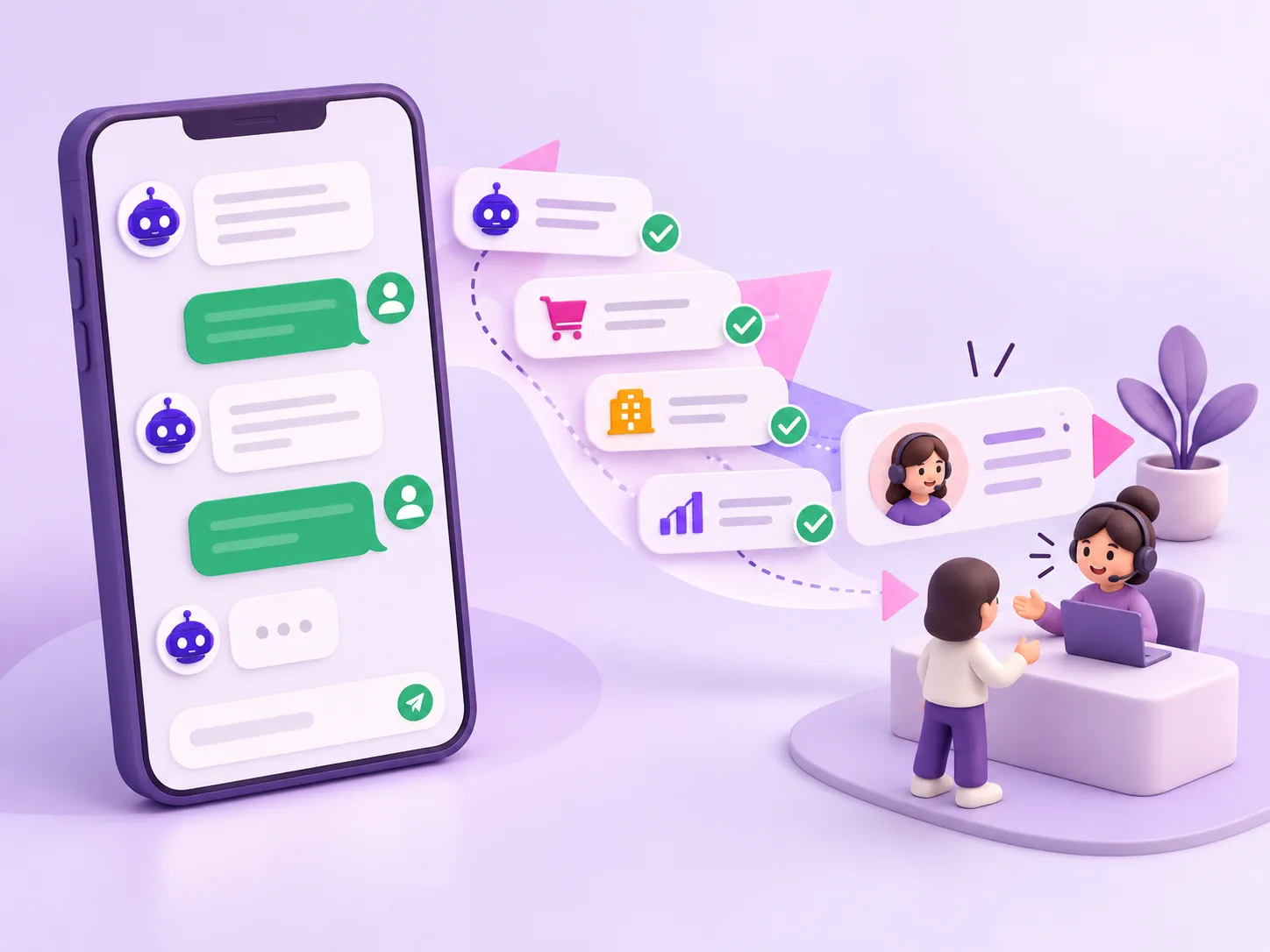
Customers on WhatsApp expect quick answers and sound judgment. That makes clear boundaries essential for a business AI assistant.
Useful automation starts small
Start with recurring questions, collecting basic data and classifying intent. A first version that tries to do everything can mix sales, support, complaints and commitments in a flow that's hard to control.
Good candidates for automation
- Answer frequently asked questions.
- Collect initial information.
- Classify requests by intent.
- Hand off to a person when there's an opportunity or a risk.
- Follow up while retaining the history.
Cases that need care
Sensitive complaints, complex pricing, commercial commitments, private data and consequential decisions need clear accountability. AI can assist in those cases.
Practical design
Start with a few cases, measure real conversations and adjust. An AI that learns from the business needs context, up-to-date data and a visible path to a person.
What to measure
Track resolved requests, correct handoffs, abandoned conversations, data collected and real opportunities. Activity alone can hide whether the AI is improving the business.